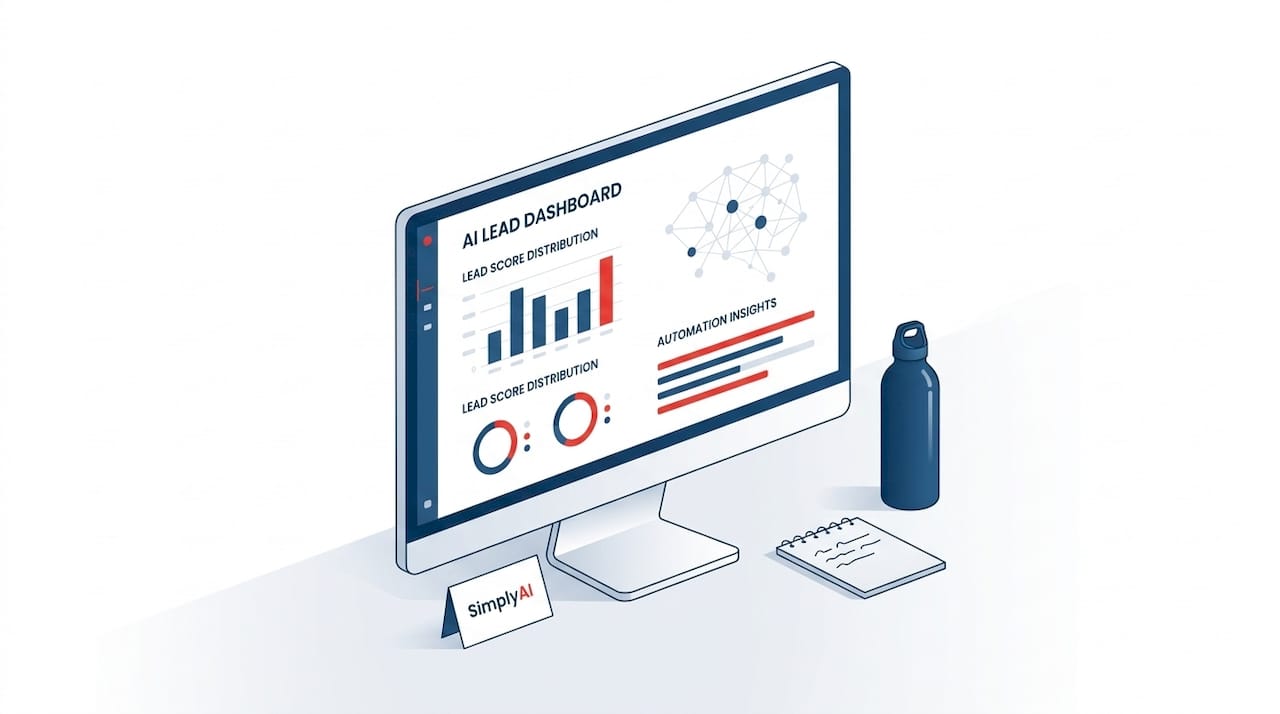
Over 60% of small businesses report lead generation as their biggest marketing challenge, yet many still rely on outdated manual methods that waste time and miss opportunities. Artificial intelligence transforms this struggle into a competitive advantage by automating repetitive tasks, identifying high-value prospects with precision, and personalizing outreach at scale. In 2026, AI-driven lead generation isn’t just for enterprise companies anymore. Small and medium-sized businesses now have access to powerful AI tools that deliver measurable results without requiring massive budgets or technical teams. This guide explores why AI matters for your lead generation strategy and how to harness its capabilities to boost sales and customer engagement.
Table of Contents
- Understanding AI’s Role In Modern Lead Generation
- Why AI Improves Lead Quality And Targeting Precision
- How AI Automation Streamlines Lead Generation Workflows
- Overcoming Challenges And Maximizing AI Benefits In Lead Generation
- Discover SimplyAI’s AI Solutions To Empower Your Lead Generation
- FAQ
Key takeaways
| Point | Details |
|---|---|
| AI automates lead processes | Machine learning and natural language processing handle repetitive tasks like lead capture, scoring, and follow-up emails automatically. |
| Data-driven targeting improves quality | AI algorithms analyze customer data to identify high-value prospects and personalize messaging for better conversion rates. |
| Workflow integration increases ROI | Connecting AI tools with existing CRM and marketing platforms streamlines operations and maximizes marketing investment returns. |
| Strategic adoption overcomes barriers | Starting small with pilot projects and investing in training ensures smooth implementation and sustainable growth. |
Understanding AI’s role in modern lead generation
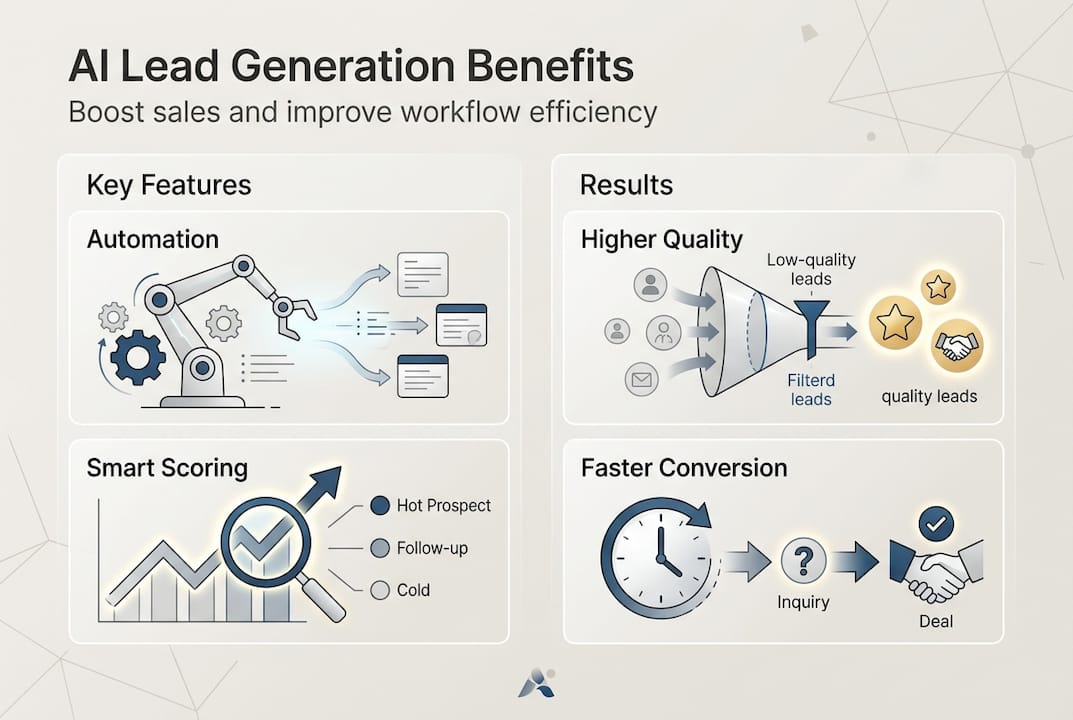
AI-driven lead generation uses machine learning and natural language processing to automate tasks that traditionally consumed hours of manual effort. At its core, this approach combines data analysis, predictive modeling, and automated communication to identify, qualify, and nurture potential customers more efficiently than human teams working alone.
Machine learning algorithms examine historical customer data to recognize patterns that indicate purchase intent. Natural language processing enables AI chatbots to engage website visitors in real-time conversations, answering questions and collecting contact information. Predictive analytics forecast which leads are most likely to convert based on behavioral signals and demographic factors.
The automation component handles repetitive tasks that bog down sales teams. AI systems can monitor multiple data sources simultaneously, scoring leads as they interact with your content, and triggering personalized email sequences based on specific actions. This frees your team to focus on relationship building and closing deals rather than data entry and manual follow-ups.
Common AI tools transforming lead generation in 2026 include:
- Conversational AI chatbots that qualify leads through natural dialogue
- Predictive lead scoring platforms that rank prospects by conversion probability
- Email personalization engines that customize messaging based on individual behavior
- Intent data analyzers that identify prospects actively researching solutions
- Automated CRM enrichment tools that populate contact records with relevant information
Building a custom AI solution workflow tailored to your business processes ensures these technologies work together seamlessly. The key is selecting tools that integrate with your existing systems and address your specific lead generation bottlenecks.
Why AI improves lead quality and targeting precision
Traditional lead generation often produces high volumes of unqualified contacts who never convert. AI-assisted analytics identifies high-value prospects by analyzing dozens of data points simultaneously, including website behavior, content engagement, social media activity, and firmographic details.

Lead scoring algorithms assign numerical values to prospects based on their likelihood to purchase. Instead of treating all leads equally, AI prioritizes those showing genuine buying signals. A prospect who visited your pricing page three times, downloaded a case study, and opened two follow-up emails receives a higher score than someone who merely subscribed to your newsletter.
Segmentation becomes dramatically more sophisticated with AI. Rather than basic demographic categories, machine learning creates micro-segments based on behavioral patterns, purchase history, and predicted needs. This enables hyper-personalized messaging that resonates with each prospect’s specific situation and pain points.
| Approach | Lead Quality | Conversion Rate | Time Investment |
|---|---|---|---|
| Manual qualification | Inconsistent, subjective | 2-5% average | 15-20 hours weekly |
| Basic automation | Improved consistency | 5-8% average | 8-10 hours weekly |
| AI-driven targeting | High precision, objective | 12-18% average | 2-3 hours weekly |
Real-world impact shows clearly in the numbers. SMBs implementing AI lead qualification report conversion rate improvements of 200-300% within the first six months. Sales cycles shorten because teams spend time on genuinely interested prospects rather than chasing cold contacts.
Pro Tip: Regularly retrain your AI models with updated customer data every quarter to maintain targeting precision as market conditions and buyer behaviors evolve.
The precision advantage extends beyond initial qualification. AI continuously monitors lead engagement throughout the buyer journey, adjusting scores and messaging strategies as prospects move closer to purchase decisions. This dynamic approach catches opportunities that static systems miss entirely.
How AI automation streamlines lead generation workflows
AI automation saves time on qualifying, nurturing, and following up with prospects, allowing sales teams to focus their energy on closing deals and building relationships. The efficiency gains compound across every stage of the lead generation funnel.
Key tasks AI automates effectively include:
- Lead capture from multiple channels including web forms, chatbots, social media, and third-party platforms
- Initial qualification through automated questionnaires and behavioral analysis
- Lead scoring updates based on real-time engagement signals
- Personalized email sequences triggered by specific actions or time intervals
- Meeting scheduling and calendar coordination
- CRM data entry and record updates
- Lead assignment to appropriate sales representatives based on territory, expertise, or workload
Implementing AI lead generation automation follows a structured approach:
- Audit your current lead generation process to identify bottlenecks and manual tasks consuming the most time.
- Select AI tools that integrate seamlessly with your existing CRM and marketing platforms to avoid data silos.
- Define clear qualification criteria and scoring parameters based on historical conversion data and ideal customer profiles.
- Create personalized messaging templates and email sequences that AI will customize for individual prospects.
- Set up automated workflows connecting lead capture, scoring, nurturing, and handoff to sales teams.
- Monitor performance metrics weekly and adjust algorithms based on conversion results and feedback.
- Scale successful automations gradually across additional channels and customer segments.
Integration with CRM platforms like HubSpot, Salesforce, or Zoho ensures AI-generated insights flow directly into systems your team already uses daily. Marketing automation platforms such as Marketo or ActiveCampaign connect AI lead scoring with email campaigns and content delivery.
Pro Tip: Start by automating one specific process completely rather than partially automating everything, ensuring smooth adoption and measurable results before expanding.
The workflow efficiency translates directly to cost savings. Teams handling 500 leads monthly with manual processes might require three full-time staff members. AI automation handles the same volume with one person overseeing the systems and focusing on high-value interactions.
Overcoming challenges and maximizing AI benefits in lead generation
Adoption obstacles SMBs face when implementing AI integration include data quality issues, integration complexity, and change management resistance from team members comfortable with existing processes. Addressing these barriers proactively determines whether AI investments deliver promised returns or become expensive failed experiments.
Data quality forms the foundation of effective AI lead generation. Algorithms trained on incomplete, outdated, or inaccurate information produce unreliable results. Before implementing AI tools, clean your existing database by removing duplicates, standardizing formats, and filling critical gaps in contact records. Establish data hygiene protocols ensuring new information enters your systems correctly from the start.
Integration complexity intimidates many small business owners who lack technical resources. The solution lies in choosing AI platforms designed specifically for SMBs with straightforward setup processes and pre-built connectors for popular business software. Many modern AI tools offer guided onboarding and implementation support, eliminating the need for specialized IT staff.
Employee training and change management deserve significant attention. Sales and marketing teams may resist AI adoption if they perceive it as threatening their jobs or adding complexity to daily workflows. Frame AI as an assistant that handles tedious tasks, allowing team members to focus on creative strategy and relationship building. Provide hands-on training sessions demonstrating how AI tools make their work easier and more effective.
Actionable strategies for successful AI adoption include:
- Start with a focused pilot project targeting one specific lead generation challenge
- Set clear success metrics before implementation to measure actual impact
- Involve end users in tool selection and configuration decisions
- Allocate budget for ongoing training and system optimization
- Document processes and best practices as your team learns
- Celebrate early wins publicly to build momentum and enthusiasm
Ongoing monitoring and optimization ensure AI systems continue delivering value as your business evolves. Review performance dashboards monthly, analyzing which lead sources, scoring criteria, and messaging strategies produce the best results. Adjust algorithms based on these insights and seasonal business patterns.
Validating your approach before major investments makes sense for resource-conscious SMBs. Consider how businesses validate SaaS ideas before development by testing assumptions with minimal viable solutions. Apply similar thinking to AI adoption by starting small, measuring results rigorously, and scaling what works.
The businesses seeing the greatest AI lead generation success treat implementation as an ongoing journey rather than a one-time project. They continuously refine their approaches based on data, maintain open communication with their teams, and stay informed about emerging AI capabilities that could provide additional advantages.
Discover SimplyAI’s AI solutions to empower your lead generation
Transforming your lead generation strategy from manual effort to AI-powered efficiency requires the right partner and proven solutions. SimplyAI specializes in helping small and medium-sized businesses implement practical AI technologies that deliver measurable sales growth and improved customer engagement.
Our AI automations services design custom workflows that capture, qualify, and nurture leads automatically while integrating seamlessly with your existing CRM and marketing platforms. We build solutions tailored to your specific business processes, ensuring AI works the way you need it to rather than forcing you to adapt to generic tools.
AI agents solutions provide intelligent chatbots and virtual assistants that engage website visitors 24/7, answering questions, qualifying prospects, and scheduling meetings without human intervention. These conversational AI systems learn from every interaction, continuously improving their ability to identify and convert high-value leads.
Adopting AI successfully requires more than just technology. Our AI corporate education programs train your sales and marketing teams to leverage AI tools effectively, overcome adoption barriers, and maximize your investment returns. We provide hands-on guidance ensuring smooth implementation and sustained results.
Ready to boost your sales and transform how you generate leads? Explore how SimplyAI’s practical AI solutions can give your business a competitive edge in 2026.
FAQ
What types of AI are most effective for lead generation?
Machine learning algorithms excel at predictive lead scoring by analyzing historical data to identify prospects most likely to convert. Natural language processing powers chatbots and personalized messaging systems that engage leads through human-like conversations. Computer vision can analyze visual content engagement, while recommendation engines suggest relevant content to nurture prospects through the buyer journey. The most effective approach combines multiple AI technologies working together in an integrated system.
How can small businesses start integrating AI into their lead generation?
Begin with a focused pilot project automating one specific lead generation process, such as initial lead qualification or email follow-up sequences. Choose AI tools designed for SMBs with straightforward setup and pre-built integrations for your existing CRM platform. Ensure you have clean, quality data before implementation, as AI algorithms require accurate information to produce reliable results. Follow a structured AI integration guide for SMBs to avoid common pitfalls and gradually scale successful automations across additional processes.
What common pitfalls should businesses avoid when using AI for lead generation?
Poor data quality undermines even the most sophisticated AI algorithms, producing unreliable lead scores and ineffective personalization. Lack of clear goals and success metrics makes it impossible to measure whether AI investments deliver actual returns. Under-investing in staff training leads to resistance and improper tool usage that limits results. Neglecting regular monitoring and model updates causes AI systems to become less effective over time as market conditions and buyer behaviors evolve. Set realistic expectations, recognizing that AI enhances human capabilities rather than replacing strategic thinking entirely.
How much does AI lead generation technology cost for small businesses?
Entry-level AI lead generation tools start around $50 to $200 monthly for basic chatbots and email personalization features. Mid-tier platforms with predictive scoring and CRM integration typically range from $300 to $1,000 monthly depending on lead volume and feature requirements. Custom AI solutions built specifically for your business processes involve higher upfront development costs but deliver precisely tailored functionality. Many providers offer tiered pricing that scales with your business growth, allowing you to start small and expand capabilities as you see results. Calculate ROI by comparing AI costs against the time savings and conversion rate improvements you achieve.